ABOUT BONDS
There are generally 5 types of bonds:-i)Stretcher bone
ii)Header bond
iii)English bond
iv)Flemesh bond
v)Rat Trape bond
There are vast different between these boones as given below:-
1)Stretcher bond
All bricks are arranged in stretcher course in this bond. The following are some features of Stretcher bond.
- All bricks laid in stretcher course create stretcher bond.
- This bond is useful for half brick wall/partition walls.
- There is no header in such walls.
- This bond does not develop proper internal bond or joint.
- It should not be used for walls having thickness greater than half brick wall.
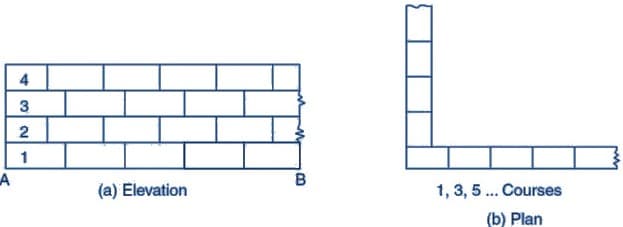
Diagram in paint software
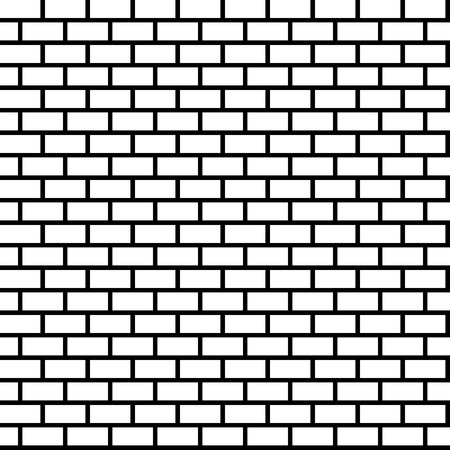
2)Header bond
All bricks are arranged in header courses. The following are some features of header bond.
- This
brick bond is used for curved surface in brick work because if
stretcher is used for curved surface, it would project beyond the face
of wall.
- All bricks are arranged in header courses.
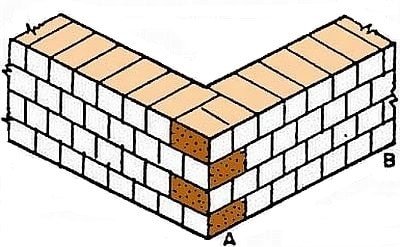
Diagram in paint software

3)English Bond
- This
bond is widely used and is considered as the strongest bond in brick
work. The following are some features of English bond.
- Alternate courses/layers consist of stretcher and header.
- Queen closer is put next to quoin header to develop face lap.
- Each alternate course/layer of header is centrally supported over stretcher.
- The number of mortar joints in header course is nearly double than that made in stretcher course.
- The joints are not continuous and vertical except at the end of wall in some cases.
- The bricks in alternate courses have straight joints
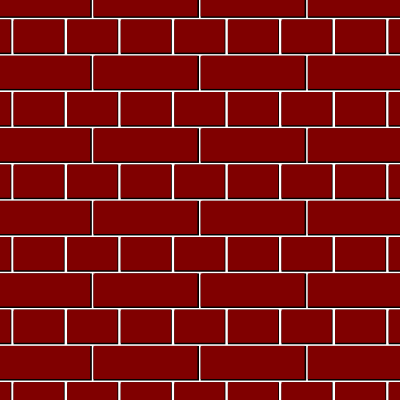
Diagram in paint software
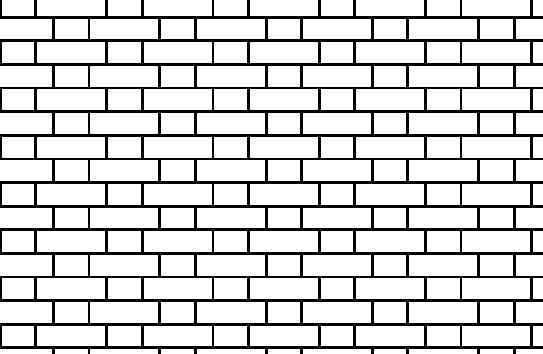
4)Flemish Bond
For
the breaking of vertical joints in the successive courses, closers are
inserted in alternate courses next to the quoin header. In walls having
their thickness equal to odd number of half bricks, bats are essentially
used to achieve the bond.
Flemish bond, also known as Dutch bond, is
created by laying alternate headers and stretchers in a single course.
The next course of brick is laid such that header lies in the middle of
the stretcher in the course below, i.e. the alternate headers of each
course are centered on the stretcher of course below. Every alternate
course of Flemish bond starts with header at the corner.
The
thickness of Flemish bond is minimum one full brick. The disadvantage of
using Flemish bond is that construction of Flemish bond is difficult
and requires greater skill to lay it properly as all vertical mortar
joints need to be aligned vertically for best effects. For the breaking
of vertical joints in the successive courses, closers are inserted in
alternate courses next to the quoin header. In walls having their
thickness equal to odd number of half bricks, bats are used to achieve
the bond.
Flemish bonds have better appearance but are weaker than
English bonds for load bearing wall construction. Thus, if the pointing
has to be done for brick masonry walls, then Flemish bond may be used
for better aesthetic view. If the walls have to be plastered, then it is
better to use English bond.
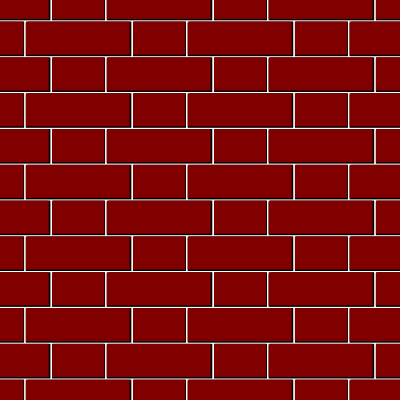
This
gives the wall with an internal cavity bridged by the rowlock. This is
the major reason where virgin materials like brick clay and cement can
be considerably saved. This adds this technology to the list of Green
building technologies and sustainability for an appropriate option as
against conventional solid brick wall masonry.
This
cavity adds an added advantage as it adds a Green building feature of
help maintain improved thermal comfort and keep the interiors colder
than outside and vice versa.
The
Rat trap bond construction is a modular type of masonry construction.
Due care must be taken while designing the wall lengths and heights for a
structure. The openings and wall dimensions to be in multiples of the
module. Also the course below sill and lintel to be a solid course by
placing bricks on edge. The masonry on the sides of the openings also to
be solid as will help in fixing of the opening frame.
MATERIALS SELECTION AS PER NEED AND DESIGN
Bricks
§ As
far as possible, use of fired clay bricks should be checked with
alternative bricks i.e. fly ash bricks, bricks from construction waste
etc as firing of bricks is in general highly energy consuming and air
polluting.
§ These
alternate bricks provide better strength and durability than fired clay
bricks and finishing cost of your wall can be saved with a better
quality and aesthetically soothing environment in the interiors.
Mortar:
§ Lime
should be explored as a material for mortar as it is locally available
in many parts of the country and helps reduce the consumption of cement.
§ Lime
as a binding material along with fly ash can result in to make lime
pozzolona mortar which saves on your cost of cement. It also adds
another Green building feature, use of industrial waste (i.e. flyash) as
a raw material for your construction.
ADVANTAGES OF USING RAT TRAP BOND TECHNOLOGY
§ By
adopting this method of masonry, you can save on approx. 20-35% less
bricks and 30-50% less mortar; also this reduces the cost of a 9 inch
wall by 20-30 % and productivity of work enhances.
§ For 1 m3 of Rat trap bond, 470 bricks are required compared to conventional brick wall where a total of 550 bricks are required.
§ Rat
trap bond wall is a cavity wall construction with added advantage of
thermal comfort. The interiors remain cooler in summer and warmer in
winters.
§ Rat-trap
bond when kept exposed, create aesthetically pleasing wall surface and
cost of plastering and painting also may be avoided.
§ Rat trap bond can be used for load bearing as well as thick partition walls.
§ All works such as pillars, sill bands, window and tie beams can be concealed.
§ The
walls have approx. 20% less dead weight and hence the foundations and
other supporting structural members can suitably be designed, this gives
an added advantage of cost saving for foundation.
§ Service’s installations should be planned during the masonry construction if not exposed.
§ Virgin
materials such as bricks, cement and steel can be considerably saved
upon by adopting this technology. It will also help reduce the Embodied
Energy of virgin materials and save the production of Green House Gases
into the atmosphere.
§ In case for more structural safety, reinforcement bars can be inserted through the cavity till the foundation.


For
the breaking of vertical joints in the successive courses, closers are
inserted in alternate courses next to the quoin header. In walls having
their thickness equal to odd number of half bricks, bats are essentially
used to achieve the bond.
Flemish bond, also known as Dutch bond, is
created by laying alternate headers and stretchers in a single course.
The next course of brick is laid such that header lies in the middle of
the stretcher in the course below, i.e. the alternate headers of each
course are centered on the stretcher of course below. Every alternate
course of Flemish bond starts with header at the corner.
The
thickness of Flemish bond is minimum one full brick. The disadvantage of
using Flemish bond is that construction of Flemish bond is difficult
and requires greater skill to lay it properly as all vertical mortar
joints need to be aligned vertically for best effects. For the breaking
of vertical joints in the successive courses, closers are inserted in
alternate courses next to the quoin header. In walls having their
thickness equal to odd number of half bricks, bats are used to achieve
the bond.
Flemish bonds have better appearance but are weaker than
English bonds for load bearing wall construction. Thus, if the pointing
has to be done for brick masonry walls, then Flemish bond may be used
for better aesthetic view. If the walls have to be plastered, then it is
better to use English bond.
This
gives the wall with an internal cavity bridged by the rowlock. This is
the major reason where virgin materials like brick clay and cement can
be considerably saved. This adds this technology to the list of Green
building technologies and sustainability for an appropriate option as
against conventional solid brick wall masonry.
This
cavity adds an added advantage as it adds a Green building feature of
help maintain improved thermal comfort and keep the interiors colder
than outside and vice versa.
The
Rat trap bond construction is a modular type of masonry construction.
Due care must be taken while designing the wall lengths and heights for a
structure. The openings and wall dimensions to be in multiples of the
module. Also the course below sill and lintel to be a solid course by
placing bricks on edge. The masonry on the sides of the openings also to
be solid as will help in fixing of the opening frame.
MATERIALS SELECTION AS PER NEED AND DESIGN
Bricks
§ As
far as possible, use of fired clay bricks should be checked with
alternative bricks i.e. fly ash bricks, bricks from construction waste
etc as firing of bricks is in general highly energy consuming and air
polluting.
§ These
alternate bricks provide better strength and durability than fired clay
bricks and finishing cost of your wall can be saved with a better
quality and aesthetically soothing environment in the interiors.
Mortar:
§ Lime
should be explored as a material for mortar as it is locally available
in many parts of the country and helps reduce the consumption of cement.
§ Lime
as a binding material along with fly ash can result in to make lime
pozzolona mortar which saves on your cost of cement. It also adds
another Green building feature, use of industrial waste (i.e. flyash) as
a raw material for your construction.
ADVANTAGES OF USING RAT TRAP BOND TECHNOLOGY
§ By
adopting this method of masonry, you can save on approx. 20-35% less
bricks and 30-50% less mortar; also this reduces the cost of a 9 inch
wall by 20-30 % and productivity of work enhances.
§ For 1 m3 of Rat trap bond, 470 bricks are required compared to conventional brick wall where a total of 550 bricks are required.
§ Rat
trap bond wall is a cavity wall construction with added advantage of
thermal comfort. The interiors remain cooler in summer and warmer in
winters.
§ Rat-trap
bond when kept exposed, create aesthetically pleasing wall surface and
cost of plastering and painting also may be avoided.
§ Rat trap bond can be used for load bearing as well as thick partition walls.
§ All works such as pillars, sill bands, window and tie beams can be concealed.
§ The
walls have approx. 20% less dead weight and hence the foundations and
other supporting structural members can suitably be designed, this gives
an added advantage of cost saving for foundation.
§ Service’s installations should be planned during the masonry construction if not exposed.
§ Virgin
materials such as bricks, cement and steel can be considerably saved
upon by adopting this technology. It will also help reduce the Embodied
Energy of virgin materials and save the production of Green House Gases
into the atmosphere.
§ In case for more structural safety, reinforcement bars can be inserted through the cavity till the foundation.


Comments
Post a Comment